
The Great Wildebeest Migration – Nature’s Most
Breathtaking Spectacle
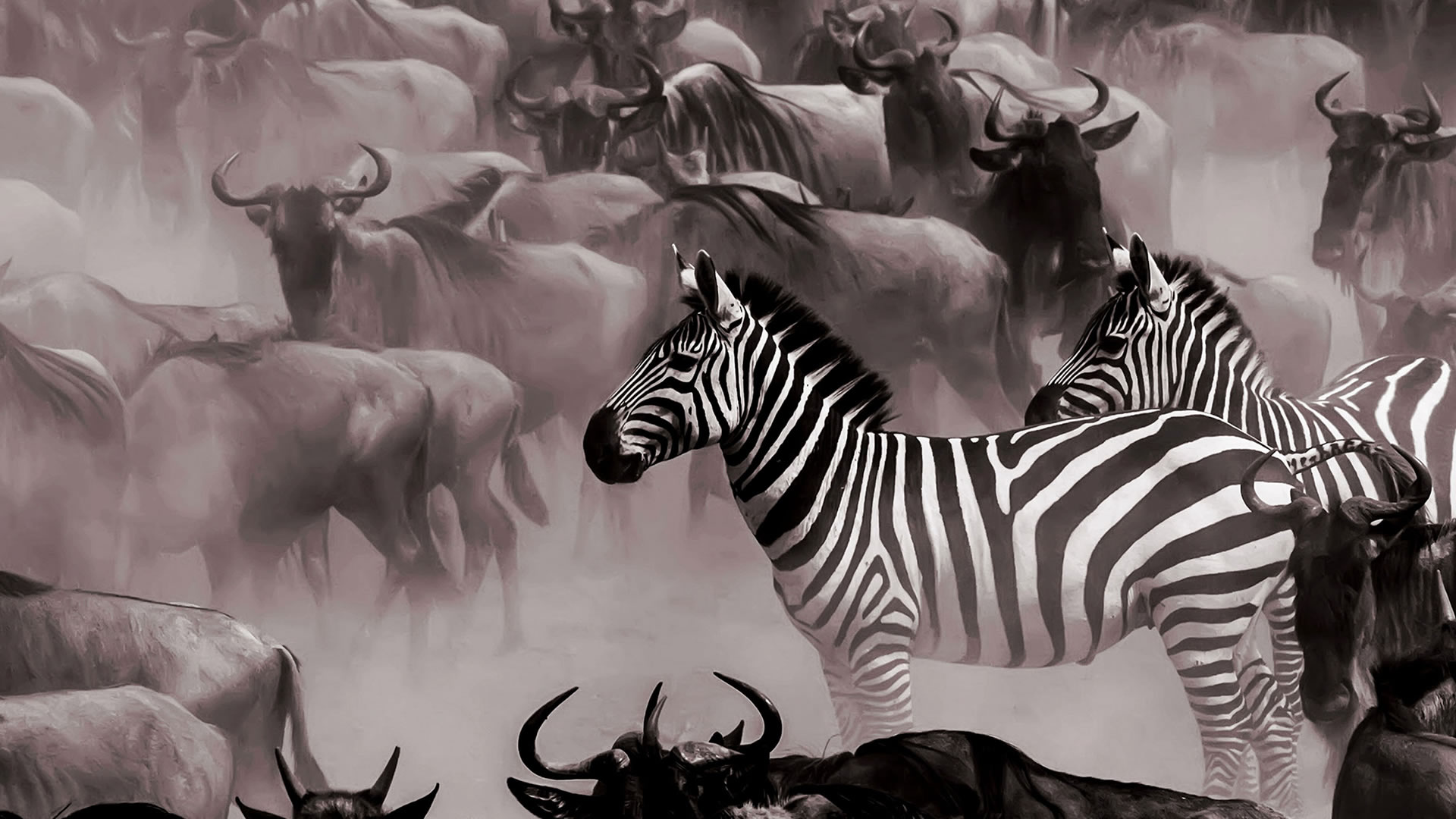
Witness the rhythm of life and survival during the Great Wildebeest Migration in Masai Mara Kenya – the planet’s most dramatic wildlife phenomenon, unfolding annually across the sweeping plains of the Serengeti in Tanzania and Masai Mara in Kenya. This awe-inspiring journey of over 1.5 million wildebeest, accompanied by hundreds of thousands of zebras, gazelles, elands, and impalas, is not just a migration – it’s a circle of life powered by instinct, survival, and the promise of new life.
A Journey Like No Other: The Migration Route
The Great Migration isn’t just a single event; it’s an endless loop of movement shaped by the rhythm of East Africa’s seasons. While the animals may not use a GPS, they instinctively follow the rains, sensing fresh grass from over 50 kilometers away, guided by thunderstorms, distant lightning, and age-old migratory instincts passed down over generations.
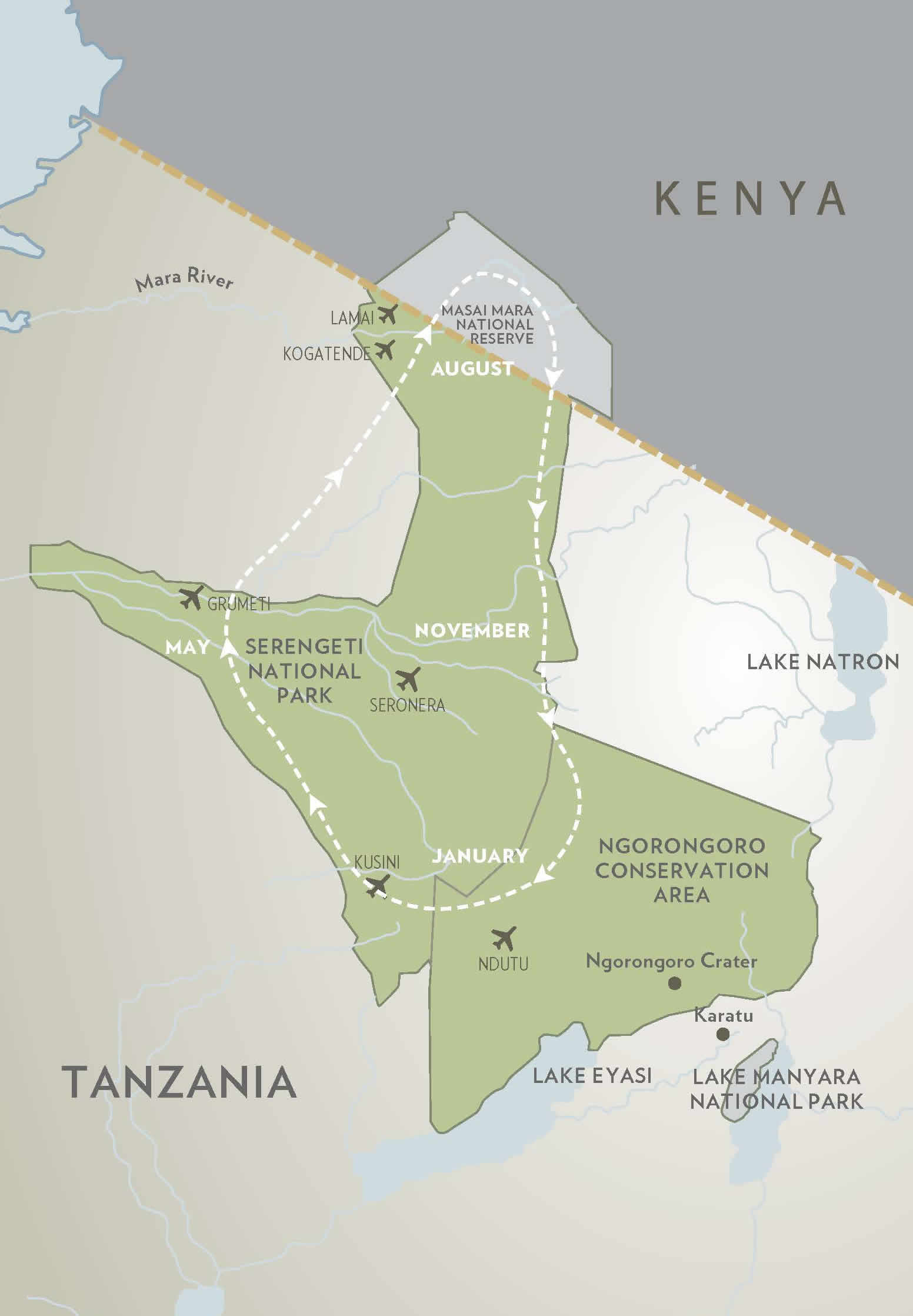
Their odyssey covers nearly 3,000 kilometers annually, in a circular pattern from the southern Serengeti plains to Kenya’s Masai Mara and back again, braving raging rivers, stealthy predators, and perilous landscapes along the way.
January – March: Birthing Season in the Southern Serengeti
The year begins in the Ngorongoro Conservation Area and the southern Serengeti, where the migration reaches a peaceful but vital chapter: calving season. Vast short-grass plains provide nutrient-rich grazing grounds for lactating mothers. Around 400,000 wildebeest calves are born in just 2-3 weeks – that’s nearly 8,000 new lives every day. This season of abundance draws intense predator activity – lions, hyenas, cheetahs, and jackals are never far away, waiting to strike. It’s a beautiful yet brutal reminder that the Great Migration is not just about movement – it’s about survival.
April – May: Northbound Journey and the Mating Season
As the plains dry up, the herds begin to move northwest, heading into the central Serengeti. April sees the slow drift toward fresher pastures, with columns of wildebeest stretching for kilometers. By May, the migration converges near the Moru Kopjes and Western Corridor – a spectacular sight of dense wildlife herds. It’s also mating season – the “rut” – when male wildebeest clash head-to-head, battling for dominance and mating rights. The landscape echoes with the sounds of hooves, horns, and primal calls as nature’s drama unfolds.
June – July: The Great River Crossings Begin
As the dry season tightens its grip, the herds reach their first deadly obstacle: the Grumeti River. Lurking in its murky waters are giant Nile crocodiles, ready to ambush. The herds build tension at the water’s edge, testing and waiting, until one brave soul makes the first leap. Survival here depends on instinct, timing, and a bit of luck. By July, the pressure builds as the mass of wildebeest approaches the Mara River – a far more dramatic crossing filled with even greater risk.
July – October: Masai Mara and the Mara River Crossings
This is the peak of the Great Migration – the time when the spectacle reaches its most thrilling, heart-pounding climax. From late July to September, the herds pour into Kenya’s Masai Mara, crossing the Mara and Talek Rivers, often with crocodiles lying in wait and lions stalking nearby. The crossings are raw, emotional, and chaotic. You’ll experience a rollercoaster of anticipation, fear, exhilaration, and awe as thousands of animals plunge into the rushing waters. No two crossings are ever the same – and no other wildlife encounter compares to this.

September – October: Scattered Herds and Return Preparations
By September, most of the herds have dispersed across the Masai Mara, grazing on its lush grasslands. But the journey is far from over. Predators continue to follow, and survival is still the driving force. The herds begin preparing for their southbound journey, instinctively sensing the coming short rains in the Serengeti. This is a quieter but no less stunning time to visit – with plenty of wildlife action, beautiful light, and excellent photo opportunities.
October – December: The Circle Closes
As the first rains fall in late October and November, the herds begin their migration back south into the Serengeti. The land awakens with fresh green shoots, and the wildebeest follow the scent of new life. By December, they return to the Ngorongoro plains, where the next calving season will soon begin. And just like that, the cycle of life begins again – continuous, eternal, and astonishing.

The Great Migration in June and July
During June, the dry season starts, with large concentrations of wildebeest in the Western Serengeti and on the southern banks of the Grumeti River. Each migrating animal must face the challenge of crossing the crocodile-infested river - the first of many daunting and tense river encounters. As June moves into July, the hundreds of thousands of wildebeest and zebra continue to head north along the western edge of the park towards an even riskier barrier: the Mara River in the north of the Serengeti. These river crossings are arguably one of the most exciting wildlife events on Earth; they usually start at the onset of high season in July, but timing all depends on nature.
Later in July, those animals that have successfully made it across the Mara River will also be found in Kenya’s Masai Mara, where daily river crossings can be seen at the Mara and Talek rivers – both often central to incredible scenes.
Why Witness the Great Migration?
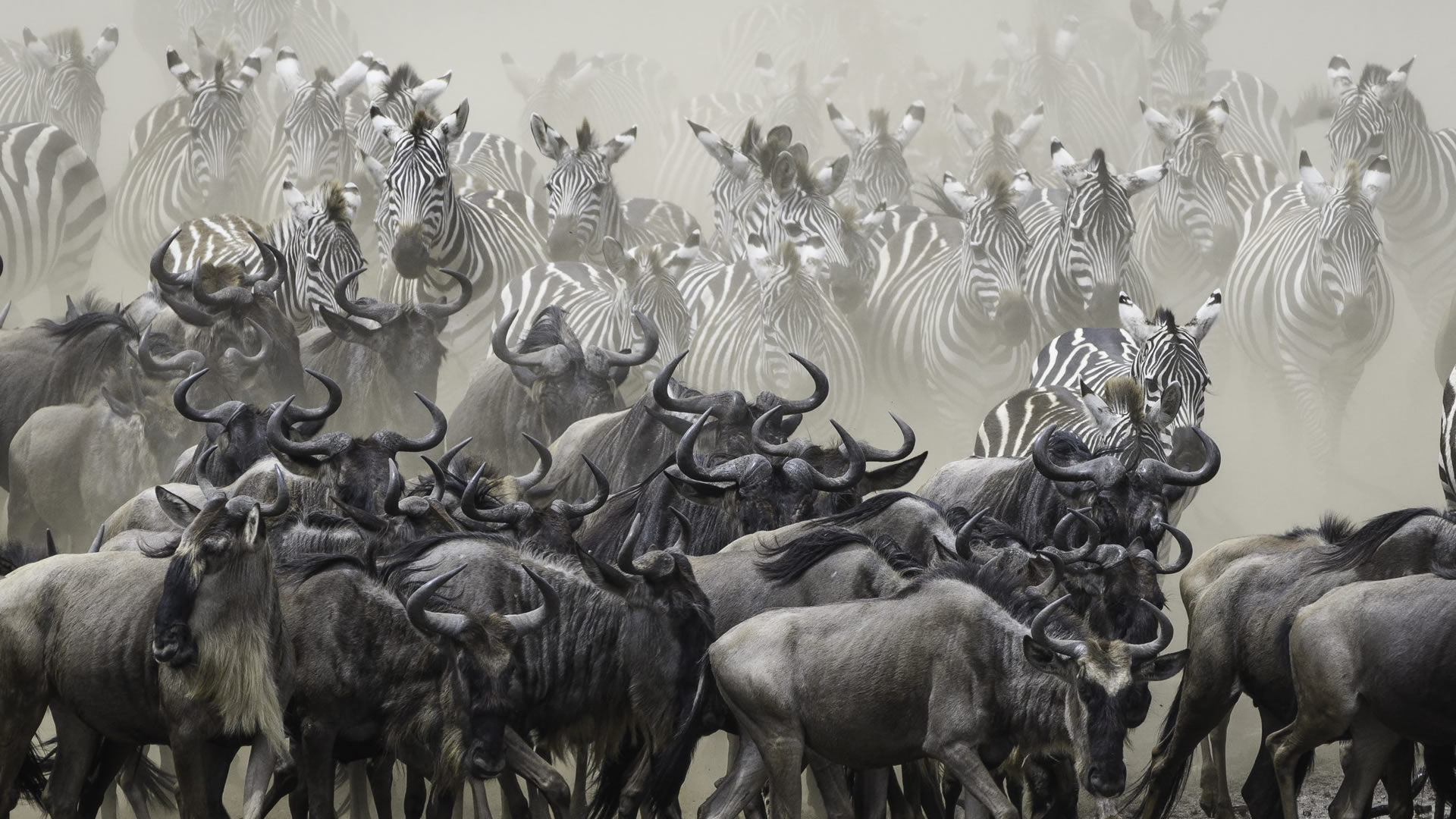
- Over 2 million animals on the move – the largest terrestrial migration on Earth
- Dramatic river crossings with crocodiles, lions, and heart-stopping action
- Unrivaled photo opportunities and intimate predator-prey interactions
- Explore the iconic Masai Mara and Serengeti ecosystems
- Year-round migration events, each with its own unique story and wildlife moments
- Best Time to Visit for the Great Migration:
- Calving Season: January – March (Southern Serengeti)
- Rutting Season: May – June (Central Serengeti)
- River Crossings: July – September (Grumeti & Mara Rivers)
- Return Migration: October – November (Northern Serengeti to Southern Plains)
- Experience the Migration with Across Wilderness Expedition Ltd
- Whether you want to witness a Mara River crossing, marvel at newborn calves on the plains, or follow the journey across the wild heart of Africa, we’ll help you experience the Great Migration like never before.
Contact us today to plan your perfect safari – and take part in one of nature’s most powerful and unforgettable events.
Why choose Across Wilderness Expedition?

Reliable Local Support
We have a great relationship with local hotels, lodges & camps ensuring you get top notch service!

24 Hours Response
Our safari consultants are at hand to respond and address all your requests within 24 hours of your request

Knowledgeable Consultants
We are indigenous, we understand the best destinations and experiences to wow your travel plans

Great Savings
We have the best bargains from local suppliers while maintaining top quality service!
OUR ACCREDITATIONS & BOOKING SECURITY
Across Wilderness Expedition Ltd is licensed by the Kenya Tourism Regulatory Authority (TRA) and is also affiliated
with multiple booking platforms.


